Why Traditional Analytics Were Never Designed to Drive Revenue
Most companies rely heavily on analytics.
Dashboards get reviewed.
Numbers get tracked.
Reports get shared.
And yet, when revenue stalls, analytics rarely give a clear answer as to why.
That’s not because teams aren’t looking hard enough.
It’s because traditional analytics were never built to answer revenue questions in the first place.
Analytics Were Built to Measure, Not to Act
Most analytics tools were designed with one primary goal:
To measure what already happened.
How many visitors came to the site.
Which pages were viewed.
Where people dropped off.
That information is useful — but it’s also passive.
It tells you the story after the moment that mattered has already passed.
The Problem Isn’t the Data — It’s the Timing
Revenue decisions don’t happen in hindsight.
They happen in moments:
- When interest starts forming
- When comparisons begin
- When attention quietly shifts toward a solution
Traditional analytics don’t surface those moments.
They summarize them later — once it’s too late to influence the outcome.
Why “More Data” Doesn’t Fix the Issue
When revenue feels unpredictable, the usual reaction is to add more tracking.
More charts.
More filters.
More metrics.
But more data doesn’t automatically create clarity.
In many cases, it does the opposite.
Teams end up with plenty of information — but very little direction.
What Revenue Actually Needs
Revenue doesn’t respond to reports.
It responds to:
- Timing
- Relevance
- Attention at the right moment
To influence revenue, you need to understand:
Who is paying attention right now.
What they’re engaging with.
And how that behavior is changing.
Traditional analytics were never designed to answer those questions.
Why This Creates Friction Between Teams
This gap often shows up as tension.
Marketing points to traffic and engagement.
Sales points to pipeline and conversations.
Both sides are working with partial information.
Analytics confirms activity — but doesn’t explain intent.
So teams make educated guesses and hope timing works in their favor.
The Shift That Changes Everything
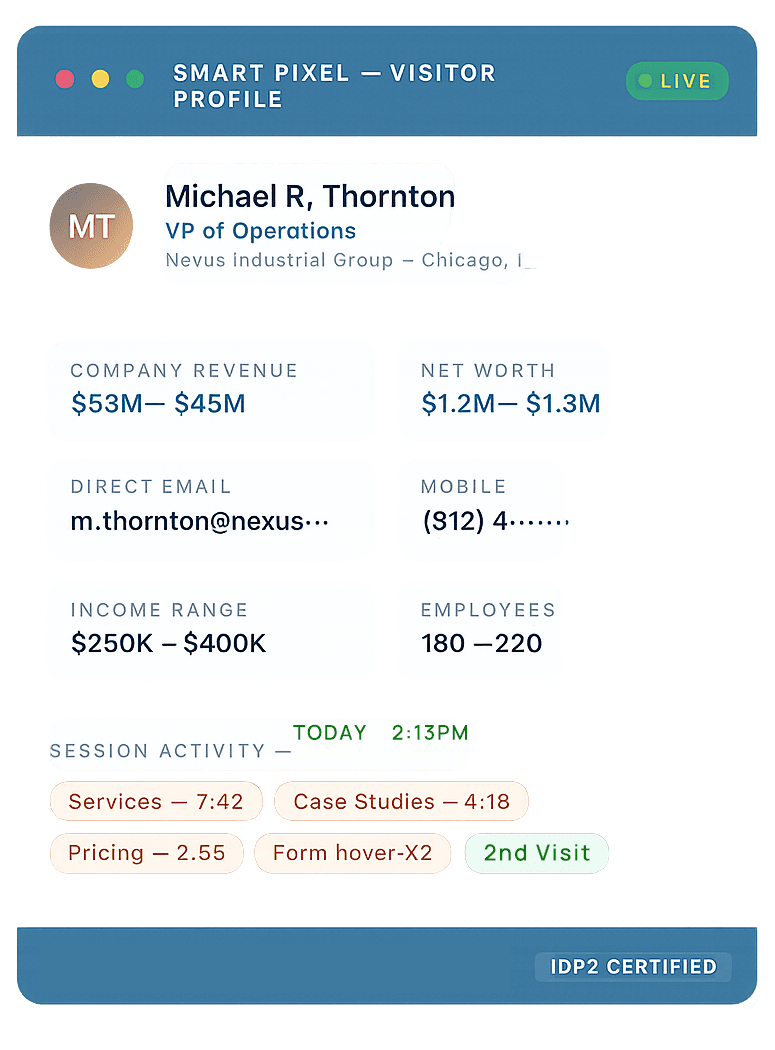
Things change when analytics move beyond counting activity and start revealing behavior.
Not just how many people visited — but who is showing interest and how that interest is evolving.
When visibility improves, decisions get simpler:
- Sales knows who to prioritize
- Marketing knows what’s actually resonating
- Leadership understands where demand is forming
No new dashboards required.
Just better questions — answered sooner.
The Bottom Line
Traditional analytics aren’t broken.
They’re just doing exactly what they were designed to do.
The mistake is expecting them to drive revenue when they were built to report on history.
Once you understand that difference, it becomes obvious why so many teams feel stuck — and why the companies that see intent earlier always seem to move faster.
Curiosity is the first step.
Visibility is the next.